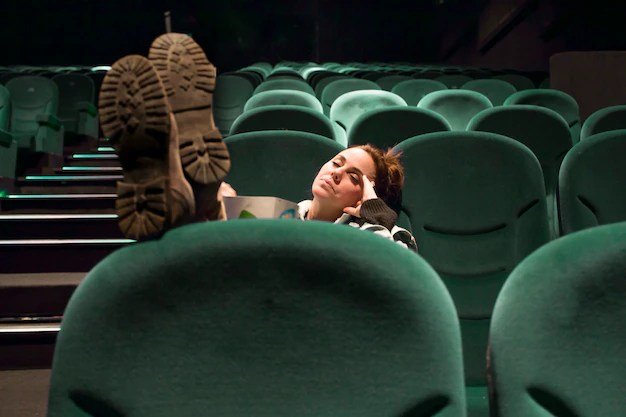
There’s a unique hush that falls over a movie theater just before the lights dim, a collective breath held in the liminal space between reality and the silver screen. This isn’t just dead time; it’s a charged interlude, a psychological crucible shaping the very experience you’re about to have. The psychological impact of waiting in cinema is far more profound than mere impatience; it's a complex interplay of anticipation, social dynamics, and pre-loading emotional states that primes us for the cinematic journey ahead.
We step into these darkened halls seeking more than just entertainment. Movies offer an escape, yes, but also intellectual fulfillment, challenging our values and beliefs. As Skip Dine Young Ph.D., author of Psychology at the Movies, observes, we consciously reflect on and internalize elements from films, allowing them to profoundly impact us psychologically and even spiritually. The waiting period, therefore, isn't just a preamble; it's an integral part of this deeper engagement.
At a Glance: The Psychology of the Cinematic Wait
- Anticipation Amplifies Emotion: The wait builds excitement, fear, or wonder, making the film's impact stronger.
- Mood Pre-Loading: Our state of mind before the film begins (influenced by trailers, ads, or personal expectations) biases our reception of the movie.
- Social Bonding: Sharing the waiting experience with others fosters a sense of collective immersion and empathy.
- Escapist Gateway: The transition from the lobby to the dark theater is a ritualistic shedding of daily life, preparing us for fantasy.
- Memory Formation: The pre-show experience contributes to the overall memory and emotional resonance of the movie.
The Unique Ritual: Why Waiting for a Movie Matters
Think about it: very few other activities involve such a formalized period of collective anticipation. We arrive early, find our seats, and settle in as the ambient noise slowly fades into hushed whispers. This isn't accidental; it's a carefully orchestrated ritual that sets the stage for deep immersion. From the very beginnings of cinema, which started in the United States at Thomas Edison Studios in West Orange, New Jersey, the power of film to shock and engage audiences was evident. When Edison publicly showcased films in 1894 and produced "The Kiss" in 1896, the novelty and emotional impact were immediate.
The wait acknowledges that films are not mere passive consumption. They are experiences that can be intellectually challenging, capable of inspiring introspection and even profound spiritual reflection, as seen in George Lucas’s design of Star Wars with its spiritual sub-themes of good versus evil. Lucas aimed for young people to ponder deeper life questions, and the very act of settling in to watch such a narrative begins that ponderance.
The Power of Anticipation: Fueling the Cinematic Journey
The act of waiting itself is a potent psychological tool, particularly in the context of cinema. It builds anticipation, creating a dopamine rush that heightens our receptivity to the coming experience. This "pre-show hype" isn't just about trailers and commercials; it's about the internal narrative we construct, the expectations we set, and the mood we begin to cultivate.
Studies by Joseph P. Forgas and Stephanie Moylan (University of New South Wales, 1987) demonstrated that movies significantly influence mood and judgments across various viewpoints, from political opinions to future expectations. Crucially, they found that optimistic films led to positive biases, while sad or aggressive films led to negative biases, consistent across demographics. Consider how this impacts the waiting period: if you're queuing for a highly anticipated comedy, your mood is likely already elevated, predisposing you to greater enjoyment. Conversely, if you're steeling yourself for a grim drama, that anticipation primes a more somber, reflective state. The wait, in essence, is a warm-up act for your emotions.
This pre-loading of emotion is why the movie-going experience feels so different from watching at home. The communal aspect amplifies everything. You're not just waiting alone; you're part of a collective holding its breath. This shared anticipation fosters a unique social contract, where individual excitement merges into a powerful, palpable energy within the theater.
Emotional Pre-Loading: How Genres Shape Expectations
Different film genres leverage the waiting period in distinct ways, priming us for specific emotional journeys. The type of movie you’ve bought tickets for inherently shapes your psychological state as you await its start.
The Thrill of the Unknown: Waiting for Horror
No genre exploits the psychological impact of waiting quite like horror. From early examples like Georges Mèliès' "The House of the Devil" (1896) to Universal Studios' 1931 "Frankenstein" and later, Alfred Hitchcock’s masterworks, horror has always aimed to evoke fear, disgust, and terror. The wait for a horror film is a slow burn of dread. You know what's coming, or at least you think you do, and that knowledge heightens the anxiety. Hitchcock, a master of suspense, intentionally used "provocation" and "anxiety" to captivate audiences and embed deep memories, creating lasting fears like a fear of birds after The Birds or a shower phobia attributed to Psycho.
As you sit in the theater, the trailers for other terrifying films, the low hum of the speakers, and the rustling of fellow audience members become part of the build-up. Your brain begins to anticipate jump scares, gruesome scenes, or unsettling psychological twists, long before the opening credits roll. This pre-programmed fear makes the eventual on-screen events far more impactful, making the cinema a safe escape where you can engage with your fascination with the idea of reality.
Awe and Inspiration: Waiting for Spiritual or Epic Narratives
On the opposite end of the spectrum, films with spiritual or epic themes evoke a different kind of waiting. For those anticipating a film like Star Wars, described as a "religion within itself" with "The Force" paralleling Christian concepts, the wait can be one of quiet reverence or excited immersion in a familiar mythology. Characters like Yoda become spiritual guides, and the entire experience is framed as a journey into moral guidance.
Even children's movies like Disney's "Lion King" exploit emotional hooks like separation anxiety and introduce spiritual subthemes such as the immortal soul and African animism. For children, waiting for such a film can be a period of innocent wonder, tinged with a nascent understanding of grand themes. The darkened theater becomes a sacred space, ready to transport them.
Escapism and Grandeur: Waiting for Bollywood Spectacle
Consider Bollywood cinema, producing 800-1000 films annually and deeply integrated into Asian-Indian daily life. Known for "music, dance routines, melodrama, lavish production values," and stunning backdrops, Bollywood films are extremely visual and musical. Waiting for a Bollywood film is an anticipation of grand spectacle, vibrant colors, and emotional crescendos. The expectation of 4-5 dance scenes instead of extensive dialogue creates a unique kind of escapism.
The audience knows they are about to embark on an emotionally rich journey, often exploring themes of romance, family, and the clash between traditional and modern values. The communal energy during the wait for a Bollywood film can be particularly lively, fueled by the shared cultural anticipation of vibrant entertainment. This pre-show excitement primes the audience for the intense emotional and musical experience that follows.
Innocence and Anxiety: Waiting for Children's Films
For children, waiting for a movie can be an intense psychological experience. G-rated films, especially Disney productions, are adept at using emotional ploys like separation anxiety. Classics like "Bambi," "Dumbo," and "The Lion King" contain scenes that can linger for years, causing nightmares, particularly for children from unstable family backgrounds, as noted by Dr. Peter B. Neubauer.
The waiting period for a child isn't just excitement; it can also be a mixture of wonder and nascent anxiety. They are highly susceptible to the emotional manipulation inherent in these films, and the anticipation can magnify both the joy and the potential distress. This underscores the need for parental guidance, as children typically discern between fantasy and reality only between 8 and 12 years of age.
The Shared Vulnerability of the Darkened Room
Once the lights dim, the psychological impact deepens. The shared waiting morphs into a shared vulnerability. The "Mirroring Rule" demonstrates that audiences mimic on-screen emotions, with sad films making viewers sadder and horror films increasing fear and arousal. This mirroring is amplified in a dark, communal space where the audience members become almost like participants rather than mere spectators, as Norman K. Denzin observed in Research Agendas in the Sociology of Emotions.
This shared experience fosters empathy, self-reflection, and personal insights. Even watching something as intense as "The Great Train Robbery" (1903), considered the origin of violent movies, would have elicited a powerful collective reaction from early audiences. The communal waiting creates a psychological bond, making individual reactions stronger and reinforcing the idea that movies are a powerful, collective psychological experience that shapes identity and worldview.
Beyond the Screen: Lasting Psychological Echoes
The psychological impact doesn't end when the credits roll. For some, particularly girls and those prone to internalizing plots, emotional bonding with movie characters can deeply impact personality and the subconscious, contributing to mood disorders or other mental health issues.
The sheer volume of media consumption also presents challenges. With the advent of VCRs and now streaming, daily movie watching has become common. Excessive consumption of fast-paced media, including movies, may contribute to ADHD and anxiety disorders. Clinical studies link programming excesses to childhood depression, and Dr. Peter B. Neubauer warned that violent movies and TV are particularly unsettling for children from unstable backgrounds. The psychological effects can be profound, from nightmares stemming from horror films to the blurring of fantasy and reality regarding themes like sex and occultism, which some communities report up to 50% of children watching grotesque horror films.
Movies don't just entertain; they shape our understanding of the world, influence our judgments (as Forgas and Moylan noted with their optimistic vs. sad/aggressive film biases), and can even inspire imitative behaviors. The very act of waiting sets the stage for these profound effects, preparing our minds to be molded.
Mitigating Negative Impacts & Harnessing the Positive
Given the significant psychological impact of waiting in cinema and the films themselves, it’s vital to engage with this medium consciously.
- Parental Guidance for Children: Children should watch movies with parents who can explain concepts, distinguish fantasy from reality, and provide emotional support. This helps mitigate the anxiety from intense scenes, cartoon violence, or emotional ploys like separation anxiety common in Disney films.
- Fostering Critical Thinking: In educational settings, teachers should not assume children can discern fantasy from reality. Films should be analyzed to foster critical thinking rather than used as mere time-fillers. Critically evaluating the narratives and themes, even for movies about waiting, can empower viewers.
- Balancing Passive with Active Engagement: The passive nature of watching movies, particularly in excess, can contribute to depression and mind-dulling by replacing active engagement with artificial stimulation. Replacing passive entertainment with active, positive activities like outdoor play, reading, creating art, learning a language or instrument, and visiting museums can strengthen minds, build self-respect, and maintain emotional and mental balance.
- Cinematherapy (Film Therapy): This psychotherapeutic tool leverages films for emotional healing and psychological growth. Dr. Pretty Duggar Gupta, a psychiatrist, views it as a valuable adjunct for stress, anxiety, and depression. It offers catharsis, insight, and relaxation by allowing patients to connect with characters experiencing similar struggles. For instance, watching "Zindagi Na Milegi Dobara" empowered a patient dealing with social anxiety. This highlights how movies, when approached intentionally, can be a powerful force for good.
- Mindful Consumption: Richard Gordon, a horror movie producer, felt some films (1982) had become "overexplicit" with violence, contributing to negative psychological consequences from overindulgence. Being mindful of the content we consume, especially for sensitive individuals, is crucial. The psychological impact of movies on emotions should be a core area of study in child and adolescent psychology, child psychiatry, emotions psychology, and abnormal psychology, as well as being considered a factor in adult mental health difficulties.
The Waiting Game: A Microcosm of Movie Magic
The moments spent waiting for a movie to begin are far from wasted. They are fertile ground where anticipation blossoms, where shared expectations unite strangers, and where our minds are subtly prepared for the immersive journey ahead. From the earliest days of cinema, when Edison's "The Kiss" (1896) both shocked and engaged, to the grand spectacles of today, the power of film to profoundly influence our minds, emotions, behavior, and attitudes has remained constant.
The unique psychological impact of waiting in cinema serves as a vital bridge between our everyday reality and the fantastical worlds unfolding on screen. It is a period of collective mental preparation, where the seeds of fear, joy, wonder, or introspection are sown, making the eventual cinematic experience all the more potent and memorable. So, the next time you find yourself sitting in a darkened theater, waiting for the movie to begin, remember: the show has already started within you.